In applying the non-aggression principle to abortion, the cordial sparring of two libertarians, one pro-life and the other pro-choice, is instructive. Murray Rothbard (1926–1995) was an American economist, teacher and writer, a student of Austrian economist, Ludwig von Mises and regarded by many as the foremost libertarian scholar of the late 20 -century.
Father Sadowsky debates Murray Rothbard
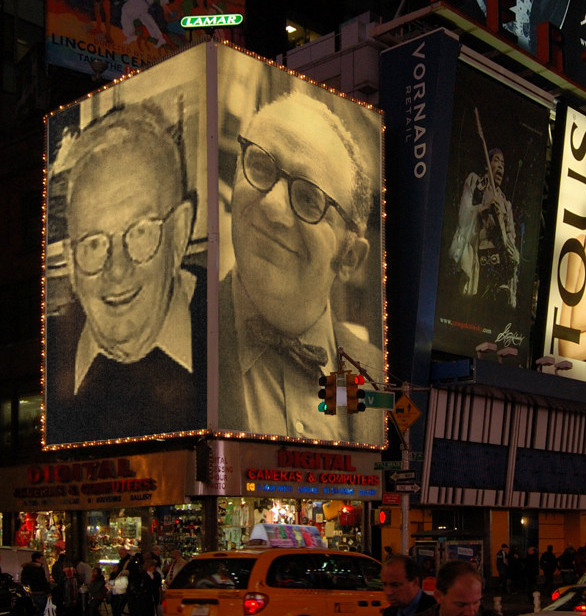
Father James A. Sadowsky, S.J. (1923–2012), was professor emeritus of philosophy at Fordham University. Father Sadowsky, a Catholic convert from Anglicanism, began teaching at Fordham in 1960. He was a longtime friend of Rothbard and a libertarian. In 1978, Father Sadowsky wrote an article, “Abortion and the Rights of the Child” in The Libertarian Forum, edited by Rothbard. He was responding to articles by Rothbard and libertarian Walter Block.
Rothbard on the unborn child: a trespassing parasite
As noted in Part 2, Rothbard, in his libertarian manifesto, For a New Liberty, accepted (at least for the purpose of discussion) that the unborn child is a living human being and fully entitled to the same rights as any human person. Then he asks:
“What human has the right to remain, unbidden, as an unwanted parasite within some other human being’s body? This is the nub of the issue: the absolute right of every person and hence every woman, to the ownership of her own body. What the mother is doing in an abortion is causing an unwanted entity within her body to be ejected from it: If the fetus dies, this does not rebut the point that no being has a right to live, unbidden, as a parasite within or upon some person’s body.”
In Rothbard’s argument, the unborn child is a trespasser who may be removed. The death of the child is but an unintentional result of the eviction; otherwise, abortion would admittedly be murder.
Abortion as a proportional response to trespass
Father Sadowsky first challenges the popular pro-choice fiction that the purpose of most abortions is to remove an uninvited guest: “What is wanted in most cases is precisely the death of the child. Most of those seeking abortions would be horrified at the thought that the child might survive his expulsion. Just ask your friends if all they are after is simply a premature birth.”
Sadowsky then exposes Rothbard’s faulty “uninvited entity” argument by asking whether we would be justified in throwing a stowaway out of an aircraft after discovery during flight. Sadowsky argues it was a more reasonable course to wait until the aircraft lands. He writes:
“At least the stowaway leaves the aircraft in the condition in which he arrived. If the abortion is successful, it is not a living, healthy child that leaves the womb. It is a corpse. Is this any way to treat even an unwanted house guest? While the death of the child may not be intended, this can hardly be said of the lethal and brutal attack on his body. That attack is the means whereby the expulsion takes place; the foetus does not die as the result of the mother’s failure to extend the means of life––it dies of the attack itself.”
Sadowsky argues that killing is not a reasonable response to the offense of trespassing. Trespassing is massively disproportional to death. Sadowsky asks “what conduct on the part of a human outside the woman would justify the response that occurs when an abortion takes place? . . . Does mere annoyance, the loss of comfort justify such an attack on a trespasser? I think not.”
Even though a person has a right to her own body and property, it would not be justifiable to shoot a child that ran into one’s yard to chase a ball, even if a “No Trespassing” sign were posted. This response would never be justifiable under the non-aggression principle because it is clearly disproportionate to the initial aggression of trespass.
Rothbard on the unborn child as stowaway

Rothbard then addresses Sadowsky’s stowaway argument with the audacious conclusion that the unborn child’s trespass in its mother’s body “is a far more heinous trespass” than that committed by a stowaway in an airplane. Presumably, he believes that reasonable short-term accommodations for trespassers must be made, but nine months is too long.
Rothbard does not say what he might do in the case of a sailboat captain who throws a stowaway overboard during a months-long ocean voyage. That would surely be a hard case. Would the choice be easier if the unwanted stowaway—like an unborn child—was no stowaway, but had actually been kidnapped by the captain and brought aboard against his will?
Is the unborn child a trespasser at all?
While Father Sadowsky argues that the remedy of abortion is grossly disproportionate to the offense of trespassing, he goes on to assert that Rothbard is also wrong in thinking the unborn child is a trespasser at all. Sadowsky insists we cannot simply assume that an unborn child has no right to be in his own mother’s womb. How can one trespass in the one place where they inarguably belong? A mother’s womb has one purpose: to nurture and protect the unborn child. There is nothing self-evident in the conclusion that the child has no overriding right to be there. Does not human nature itself demonstrate a child’s right to occupy its own mother’s womb?
When the embryonic child drops into his mother’s womb, the place is vacant, unused and ready for homesteading. The womb has no other purpose, except to nurture the child, and—but for that child growing there—it would be utterly pointless for a woman to have a womb in the first place.
In response to Sadowsky’s argument that the unborn child can hardly be a trespasser in the one (and only) place where that child belongs, Rothbard argues:
“As for the womb being the fetus’s natural habitat, no doubt, but so is the body of the host the natural habitat of the parasite. Their two natures conflict and so it would be impossible, even if the two beings could understand language and abstract thought, for either to agree to the natural rights of the other.”
Unborn child as parasite? Ridiculous
The “unborn-child-as-parasite” description of a child in its own mother’s womb has long been discredited. From Biology 101, we learned that a parasite is an organism of one species living in or on an organism of another species. A parasite is an invading organism that comes from outside the host and invades tissues—typically in a harmful way—and for the lifetime of the host. But parasite or not, Rothbard replies that if the mother does not want the child, “nature or no, the mother has the right to eject it posthaste.”

Rothbard’s audacity in calling an unborn child a parasite on its own mother body invites us to speculate if there might be other ways of thinking about this relationship. What if we turn things around and look through the other end of the telescope? Would the unborn child—if he had the means and desire—have the right to kill his mother, who—for nine months—could be regarded as his jailer? Of course, this “mother as jailer” argument is ridiculous, but so is the “baby as trespassing parasite” argument. The reason both arguments are ridiculous is that they ignore the nature of the relationship, which is unique. That very uniqueness will become glaringly obvious in Murray Rothbard’s concluding analogy in the next post.
 Catholic Libertarians