The scriptures consistently counsel Christians to obey the government except in cases where our duty to God and our conscience demands otherwise. We have also seen that the reason for obedience is not necessarily because the state’s rule is just.
In an earlier post, Jesus and the Temple Tax, we have seen that Jesus told St. Peter to pay the tax, not because it was owed, but to avoid giving offense to the authorities. St. Paul often advised Christians not to quarrel or speak ill of anyone; “to live quietly, to mind your own affairs.” 1 Thess. 4:11. Apart from the attractive appeal of a genuinely humble life, leading that quiet life played an important role in avoiding conflict with the state. Mindful of these things, we must more closely consider two New Testament scriptures often cited to compel Christians to both honor and obey the state.
1 Peter 2
St. Peter wrote his first letter from Rome to Christians in Asia, probably in the early 60’s A.D. He wrote these verses regarding the Christian duty to honor and obey human rulers:
“For the Lord’s sake accept the authority of every human institution, whether of the emperor as supreme, or of governors, as sent by him to punish those who do wrong and to praise those who do right. For it is God’s will that by doing right you should silence the ignorance of the foolish. As servants of God, live as free people, yet do not use your freedom as a pretext for evil. Honor everyone. Love the family of believers. Fear God. Honor the emperor.” Peter 2:13–17
Here, Peter calls Christians to accept the authority of human rulers, “as sent by [the Lord] to punish those who do wrong and to praise those who do right.” He urges his brother Christians to accept the authority of the state to the extent that it punishes wrongdoing and praises good deeds. Since his readers are already called to do good and avoid wrongdoing, Peter’s instruction imposes no additional burden upon his readers. The verse adds nothing which we would not already be morally required to do, with or without the state.
In the next verse, Peter tells us: “live as free people, yet do not use your freedom as a pretext for evil.” Just as Jesus taught regarding the temple tax, Peter is cautioning his readers that while they may not be morally bound to obey some directive, they must not use their freedom when its exercise would cause a greater evil.
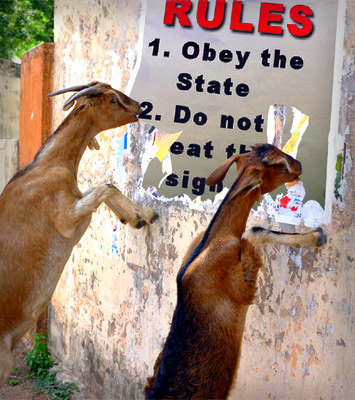
“Honor everyone,” begins verse 17. Obviously, people may be honored greatly, or honored little, or not at all, depending on how they conduct their lives, but in this verse, Peter refers to a different sort of honor: the honor which is owed to every person as an immortal creature made in the image and likeness of God. As such, the reader is reminded to respect that innate dignity and to love each person as they love themselves. Then Peter ends the verse with the phrase: “Honor the emperor,” a reminder that the emperor is due that same honor. Yes, even the emperor.
On closer examination, it would appear that the Apostle Peter’s exhortation is nuanced and looks more to one’s duty to God than to the emperor. 1 Peter 2 does is not the blanket endorsement of the state that a cursory reading might suggest.
In the next post. we will take a look at chapter 13 of St. Paul’s epistle to the Romans, which contains the chief proof-text and wellspring for those who press for unquestioned submission to the state.
 Catholic Libertarians